

If you are a cat parent, I hope you know that it’s wonderful to have your feline friends curl up next to you after a long day. However, if you start noticing clumps of hair around the house, bald patches on your cat, or constant scratching, it can be concerning. Cat hair loss is also known as alopecia. But don’t panic; there are natural and simple ways to manage and even stop cat hair loss at home.
Let’s delve into the causes of cat hair loss and explore how to treat it naturally without resorting to harsh chemicals or expensive veterinary bills.
Understanding Why Cats Lose Hair
Before we dive into solutions for Stop Cat Hair Loss , it’s important to know why your cat is losing hair. A variety of factors can cause hair loss; some are harmless, while others may require closer attention.
- Seasonal shedding: Cats naturally shed more during the spring and fall seasons. If you notice your cat losing hair at this time, and it seems uniform across the body. It could just be normal shedding.
- Poor nutrition: A poor diet lacking in essential nutrients can affect your cat’s coat health, making it dull, brittle, and more prone to falling out
- Parasites, such as fleas, mites, or ticks, can irritate the skin and cause excessive scratching or biting, resulting in fur loss.
- Stress or Anxiety: Cats are sensitive creatures; changes in their environment, such as moving homes or introducing a new pet, or even a loud noise, can trigger stress-related behaviours like over-grooming, which leads to bald patches
- Allergies: Like humans, cats also suffer from allergies to food, pollen, dust, or chemicals; allergic reactions often show up as skin irritations and hair loss.
- Fungal or bacterial infections: ringworm (a fungal infection, for instance, is a common cause of patchy hair loss in cats).
Natural Home remedies for cat hair loss
Nutrition is the foundation of a healthy coat; make sure your cat is eating a balanced, high-protein diet must includes healthy fats and essential vitamins. Look for food with real meat as the first ingredient, and avoid fillers like corn or soy.
You can also try supplements that come with natural ingredients to stop cat hair loss naturally.
- Omega-3 and Omega-6 Fatty Acids: These are great for skin and coat health. You can also find fish oil or flaxseed oil. Just a small amount added to your car’s fuel daily can make a big difference.
- Pumpkin or carrot: A small amount of pureed pumpkin or grated carrots can add vitamins and fiber, aiding digestion and skin health
- Biotin (Vitamin B7): helps strengthen hair and nails. Available as a natural supplement made for pets.
Groom your pet regularly.
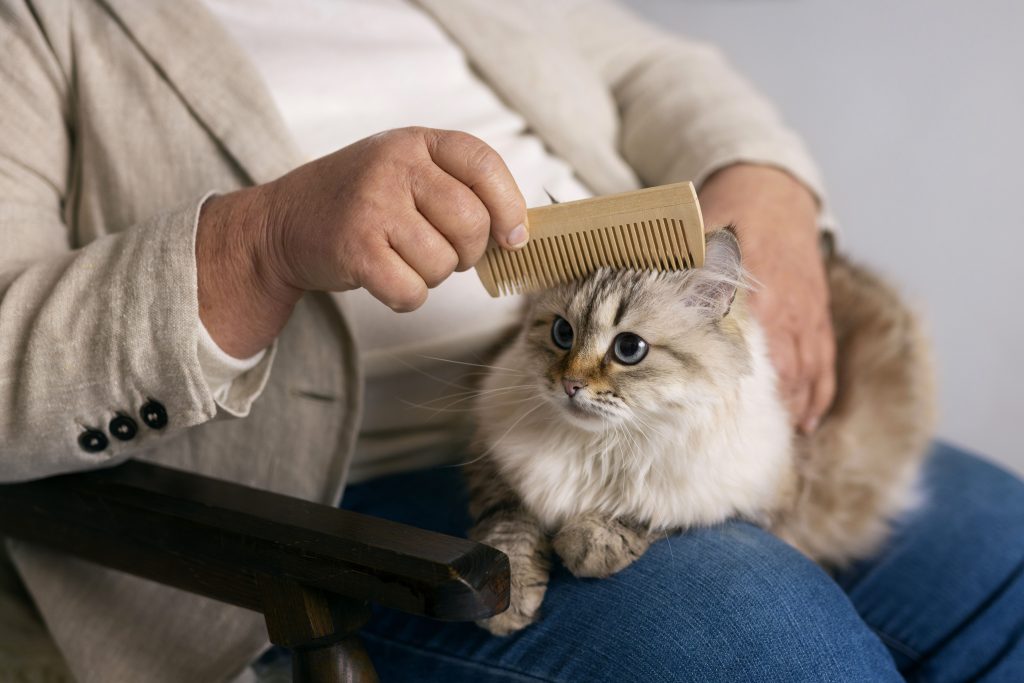
Cats groom themselves, but brushing helps remove loose hair and distribute skin oils evenly. Use a gentle, cat-friendly brush, and turn grooming into a bonding experience. Regular brushing also gives you the chance to spot issues like ticks, dry patches, or inflamed skin early on.
Reduce Stress and Anxiety
Cats are sensitive creatures; changes in their environment, new pets, loud noise, or even boredom can lead to stress-induced over-grooming
To help your cat stay calm:
- Provide a stable, quiet environment.
- Maintain a consistent daily routine.
- Offer safe hiding spots and cosy beds.
- Spend quality time playing with your cat.
- Use calming pheromone diffusers or sprays.
Sometimes, just spending 10-15 minutes daily in interactive play can reduce their anxiety dramatically and reduce hair loss caused by over-grooming
Use Natural Remedies for Skin Irritation
For your cats experiencing itching or minor skin issues, these natural treatments can help:
- Aloe vera gel (pure and pet-safe) has soothing properties; apply a small amount to affected areas, but ensure your cat doesn’t lick it off.
- Apple Cider Vinegar (Diluted): Mix 50/50 with water and use a spray bottle to lightly mist the affected area. It can help deter licking and soothe irritated skin.
- Coconut Oil: has anti-inflammatory and antifungal properties. A small dab on the skin or mixed in food can help from the inside and outside.
Tackle Parasites Naturally
If fleas or mites are a concern, but you want to avoid chemical treatment and try this:
- Diatomaceous earth (food grade): Sprinkle lightly on your cat’s bedding and carpets; it dehydrates and kills fleas without chemicals
- Neem Oil or Lavender Oil (very diluted): These essential oils can repel parasites, but must be used with caution. Always dilute heavily and consult a vet before applying.
Keep things clean
A clean environment helps prevent infections and allergies. Regularly wash your cat’s bedding, clean litter boxes, vacuum carpets, and avoid heavily scented cleaners that might irritate your pet’s skin or respiratory system.
Hydrations matters
Dry skin leads to more hair loss; make sure your cat has access to fresh water at all times. You can also include wet cat food in their diet to increase moisture intake. Some cats enjoy cat water fountains, which encourage them to drink more.
When should you take it to the vet?
While home remedies are great for minor issues or prevention, you should always consult a vet if:
- The hair loss is sudden or severe
- There are open sores, bleeding, or pus
- Your cat seems unusually lethargic or is losing weight
- The bald patches are growing or spreading
- Your cat is constantly scratching or biting itself.
In some cases, hair loss could be a symptom of a deeper medical condition that requires proper diagnosis and treatment.
Conclusions
Seeing your beloved feline lose their fur can be worrisome, but the solutions don’t always lie in expensive treatment or medications; often, small changes to your cat’s diet, environment, and grooming routine can work wonders.
Natural remedies offer a gentle, holistic way to help your cat recover their healthy coat. Just remember, patience is key, hair takes time to grow back, and consistent care makes all the difference.
Your cat gives you love, comfort, and companionship; helping them look and feel their best is just one of the many ways you can return the favor.